Prologue: The Experiments No One Sees
There is a place where hypotheses are tested without notebooks, where theories are revised without lectures, and where failures are not recorded but transformed. It is not a university laboratory or research institute. It is the ordinary space where a child plays.
A carpet becomes terrain. A spoon becomes a spacecraft. A cardboard box becomes a civilization. To the casual observer, these moments look simple, even trivial. Yet beneath their surface lies one of the most sophisticated developmental processes in human life. Childhood play is not an escape from reality; it is a method of constructing reality. It is the mind’s earliest workshop — a silent laboratory where intelligence is assembled, emotions are rehearsed, and identity is drafted long before language can fully describe them.
To understand play is to understand how human beings become themselves.
I. The Architecture Beneath the Game
Play appears spontaneous, but it is structurally complex. Within every imaginative act exists a layered system of cognitive operations: prediction, simulation, evaluation, adjustment. These are the same processes used later in scientific reasoning, strategic planning, and creative innovation.
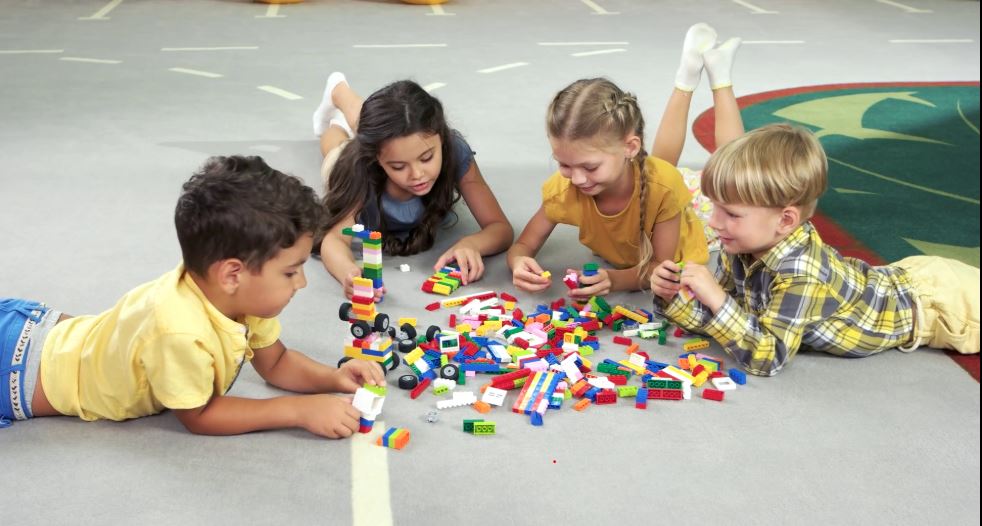
When a child stacks blocks, they are not merely arranging objects. They are conducting a realtime engineering experiment involving:
- spatial reasoning
- gravity prediction
- balance calculation
- pattern recognition
- error correction
No lecture is required. The feedback loop is immediate. The tower falls or stands. The child revises their method. The experiment continues.
In this way, play functions as an early prototype of analytical thought. It is thinking disguised as fun.
II. Imagination as a Cognitive Engine
Imagination is often mistaken for fantasy detached from reality. In truth, imagination is a simulation engine. It allows children to construct scenarios before encountering them in real life. This ability has profound developmental implications.
Through imaginative play, children mentally rehearse possibilities:
- What happens if I fall?
- What happens if someone is sad?
- What happens if I am brave?
- What happens if I try again?
Each scenario is a rehearsal for future action. The child is not escaping reality but preparing for it.
Neurologically, imagination activates many of the same brain regions involved in real experience. This means imagined events can strengthen neural pathways almost as effectively as lived ones. In other words, pretend play is practice for life.
III. Emotion in Its Experimental Phase
Adults often assume emotional maturity develops automatically with age. In reality, emotional intelligence is constructed gradually through repeated experiences many of which occur during play.
Consider a child pretending to be a doctor comforting a toy patient. This scenario may appear simple, yet it involves:
- emotional recognition
- empathy simulation
- language rehearsal
- role understanding
The child is exploring feelings from multiple perspectives. They are learning what it means to care, to comfort, to worry, and to resolve tension.
Play provides emotional rehearsal without realworld consequences. Mistakes are safe. Feelings can be exaggerated, reversed, or paused. This freedom allows children to explore complex emotional landscapes long before they face them outside play.
IV. Identity Formation in Disguise
Identity is not suddenly discovered in adolescence. Its foundation is drafted in childhood through repeated acts of selfdefinition.
Each time a child declares,
“I’m the teacher.”
“I’m the hero.”
“I’m the explorer.”
they are experimenting with possible selves.
Play allows children to test identities the way scientists test hypotheses. Some identities feel comfortable; others do not. Through this process, children begin to understand:
- what they enjoy
- what they fear
- what they value
- what they imagine becoming
Identity, therefore, is not assigned. It is constructed — and play is one of its primary construction sites.
V. The Physics of Curiosity
Curiosity behaves like energy: it seeks movement. When curiosity is allowed to flow, it drives exploration. When it is blocked, it diminishes.
Play sustains curiosity because it rewards questions instead of demanding answers. Unlike structured instruction, play does not punish uncertainty. It invites it.
A child who wonders what happens when colors mix is not memorizing information. They are generating it. They become investigator, observer, and interpreter simultaneously.
This selfdirected discovery strengthens intrinsic motivation — the internal drive to learn for the sake of understanding rather than external reward.
VI. Time Inside Play: A Different Dimension
One of the most remarkable features of play is the way it alters time perception. Children absorbed in play often lose awareness of duration. Minutes stretch. Hours disappear.
Psychologists sometimes describe this state as deep engagement — a condition in which attention, curiosity, and enjoyment merge. In such states, the brain operates at high efficiency, forming connections rapidly.
Deep engagement is also a hallmark of adult mastery. Scientists experience it while researching. Artists experience it while creating. Innovators experience it while designing.
Childhood play is often the first time a human mind enters this state.
VII. Mistakes as Building Material
In many adult environments, mistakes are treated as failures. In play, mistakes are raw material.
A collapsed block tower is not a disappointment; it is information. A failed drawing is not rejection; it is revision. A lost game is not defeat; it is feedback.
Because play reframes mistakes as neutral events rather than negative judgments, children develop resilience. They learn that error is not an endpoint but a signal for adjustment.
This mindset is foundational for problemsolving throughout life.
VIII. Social Intelligence in Motion
When children play together, they enter a complex social negotiation system. Rules must be created, agreed upon, and revised. Roles must be assigned. Conflicts must be resolved.
During these interactions, children practice:
- persuasion
- compromise
- leadership
- cooperation
- boundary setting
No lecture could replicate the complexity of these realtime social dynamics. Play becomes a rehearsal stage for citizenship, collaboration, and community participation.
IX. The Silent Curriculum
Formal education is often described as a curriculum a structured sequence of knowledge and skills. Yet alongside the official curriculum exists an invisible one: the lessons learned indirectly through experience.
Play is one of the most powerful instructors in this silent curriculum. Without formal instruction, children learn:
- persistence
- adaptability
- strategy
- creativity
- patience
These qualities are difficult to teach directly yet essential for lifelong success.
X. The Material Simplicity Principle
An intriguing pattern appears across cultures: the simplest materials often produce the richest play experiences.
A stick becomes a wand, sword, or pointer. A cloth becomes a cape, river, or shelter. A box becomes a spaceship, kitchen, or fortress.
Why does simplicity stimulate imagination?
Because undefined objects require interpretation. When a toy has only one function, imagination is limited. When an object has many possible meanings, imagination expands.
Ambiguity invites creativity.
XI. Play as a Bridge Between Inner and Outer Worlds
Children live simultaneously in two worlds: the inner world of thought and the outer world of reality. Play is the bridge connecting them.
Through play, internal ideas take physical form. A story imagined becomes a scene acted out. A feeling experienced becomes a character portrayed. An idea conceived becomes a structure built.
This translation from inner to outer experience strengthens communication skills and selfunderstanding.
XII. The Developmental Paradox
Play appears unproductive but produces growth. It appears aimless but generates direction. It appears simple but contains complexity.
This paradox explains why play is often underestimated. Adults evaluate activities based on visible outcomes. Play’s outcomes, however, are largely invisible:
- strengthened neural pathways
- refined emotional awareness
- expanded imagination
- increased adaptability
The results are real even when unseen.
XIII. Cultural Echoes of Play
Across continents and generations, children play in remarkably similar ways. They invent games, create stories, build structures, and imitate adults. This universality suggests that play is not a cultural luxury but a biological necessity.
Just as language emerges naturally when children are exposed to speech, play emerges naturally when children are given freedom and space. Its presence across cultures indicates that it serves essential developmental functions.
XIV. The Ecology of Attention
Modern environments often compete for children’s attention. Fastpaced stimuli, constant noise, and rapid digital feedback can fragment focus. Play, especially selfdirected play, restores attentional balance.
During immersive play, attention stabilizes. The mind settles into sustained concentration. This ability to maintain focus is one of the strongest predictors of later academic and professional success.
Play trains attention quietly, without drills or commands.
XV. The Long Horizon Effect
The effects of childhood play do not end in childhood. They extend forward, influencing adult capabilities in subtle ways.
Adults who experienced rich imaginative play often demonstrate:
- flexible thinking
- creative problemsolving
- emotional adaptability
- strong communication skills
- innovative reasoning
These qualities are not accidental. They are developmental echoes — traces of early experiences that shaped neural architecture.
XVI. When Play Disappears
When opportunities for play are reduced, certain developmental experiences may also diminish. Without sufficient play, children may have fewer chances to:
- experiment freely
- explore curiosity
- test ideas
- negotiate socially
- practice resilience
This does not mean development stops, but it may become less dynamic. Play acts as a catalyst, accelerating growth that might otherwise occur more slowly.
XVII. A Different Way to See Childhood
To watch a child play attentively is to witness intelligence under construction. It is to observe a mind assembling itself piece by piece, hypothesis by hypothesis, story by story.
What appears to be a simple game is often a sophisticated act of development. What appears to be noise is often cognition in motion. What appears to be fantasy is often preparation for reality.
Childhood, seen this way, is not merely a phase to pass through. It is a formative workshop where the foundations of thinking, feeling, and being are quietly built.
Frequently Asked Questions (FAQs)
- Why is play described as a “laboratory” for childhood development?
Because play functions like an experimental environment where children test ideas, explore outcomes, and learn through trial and adjustment. Just as scientists conduct experiments to understand the world, children use play to investigate how things work, how people behave, and how they themselves respond to different situations. The comparison highlights that play is an active process of discovery rather than passive entertainment. - Does imaginative play actually influence intelligence, or is it just recreational?
Imaginative play contributes significantly to intellectual growth. When children invent stories, roles, or scenarios, they practice abstract thinking, prediction, sequencing, and problem-solving. These mental processes strengthen neural connections involved in reasoning and creativity. Over time, repeated imaginative experiences can enhance cognitive flexibility the ability to approach challenges from multiple perspectives. - How does play help children understand emotions?
Play allows children to simulate emotional situations safely. By acting out stories or roles, they can explore feelings such as fear, excitement, frustration, or empathy without real-world consequences. This rehearsal helps them recognize emotions, interpret them, and respond more effectively in real situations. In essence, play becomes a training ground for emotional intelligence. - Can solitary play be as valuable as group play?
Yes. Solitary play and social play support different developmental processes. Independent play encourages concentration, imagination, and self-direction, while group play strengthens cooperation, negotiation, and perspective-taking. Both forms are important, and a balanced combination provides the richest developmental experience. - Why do simple objects often stimulate more creative play than complex toys?
Simple objects do not dictate a specific use, so children must decide how to interpret them. This open-endedness encourages imagination, symbolic thinking, and innovation. Complex toys with fixed functions can limit creative possibilities because they already define how they should be used. - What role does curiosity play during playtime?
Curiosity is the driving force behind exploratory behavior. During play, curiosity motivates children to test ideas, ask questions, and investigate outcomes. Each discovery reinforces their desire to explore further, creating a cycle of learning that strengthens attention, memory, and reasoning skills. - Is play important for identity formation?
Yes. Through role-play and imaginative scenarios, children experiment with different versions of themselves — explorer, leader, helper, inventor, or storyteller. These experiences allow them to explore preferences, values, and abilities, which gradually contribute to their developing sense of identity. - How does play support long-term learning ability?
Play strengthens foundational mental skills such as attention, persistence, adaptability, and creative thinking. These abilities are transferable across subjects and life situations. Children who regularly engage in exploratory play often develop stronger learning habits because they associate discovery with enjoyment rather than pressure. - Can structured activities replace free play?
Structured activities can support certain skills, but they cannot fully replace free play. Free play allows children to make decisions, invent rules, and explore ideas independently. This autonomy fosters initiative and originality, qualities that structured environments alone may not cultivate. - What is the long-term significance of childhood play experiences?
Experiences during early play often leave lasting cognitive and emotional patterns. Skills practiced repeatedly during play such as problem-solving, imaginative thinking, and emotional regulation can become enduring traits that influence how individuals approach challenges, relationships, and opportunities later in life.
Closing Reflection
In the quiet laboratory of childhood, no diplomas are awarded and no applause is required. The experiments are small, the tools are simple, and the results are invisible yet their consequences can last a lifetime.
Moments of play, easily overlooked, are in fact acts of construction. Intelligence is shaped. Emotion is refined. Identity is drafted. Not through instruction, but through exploration.
To understand this is to see play not as a pause in development, but as development itself.