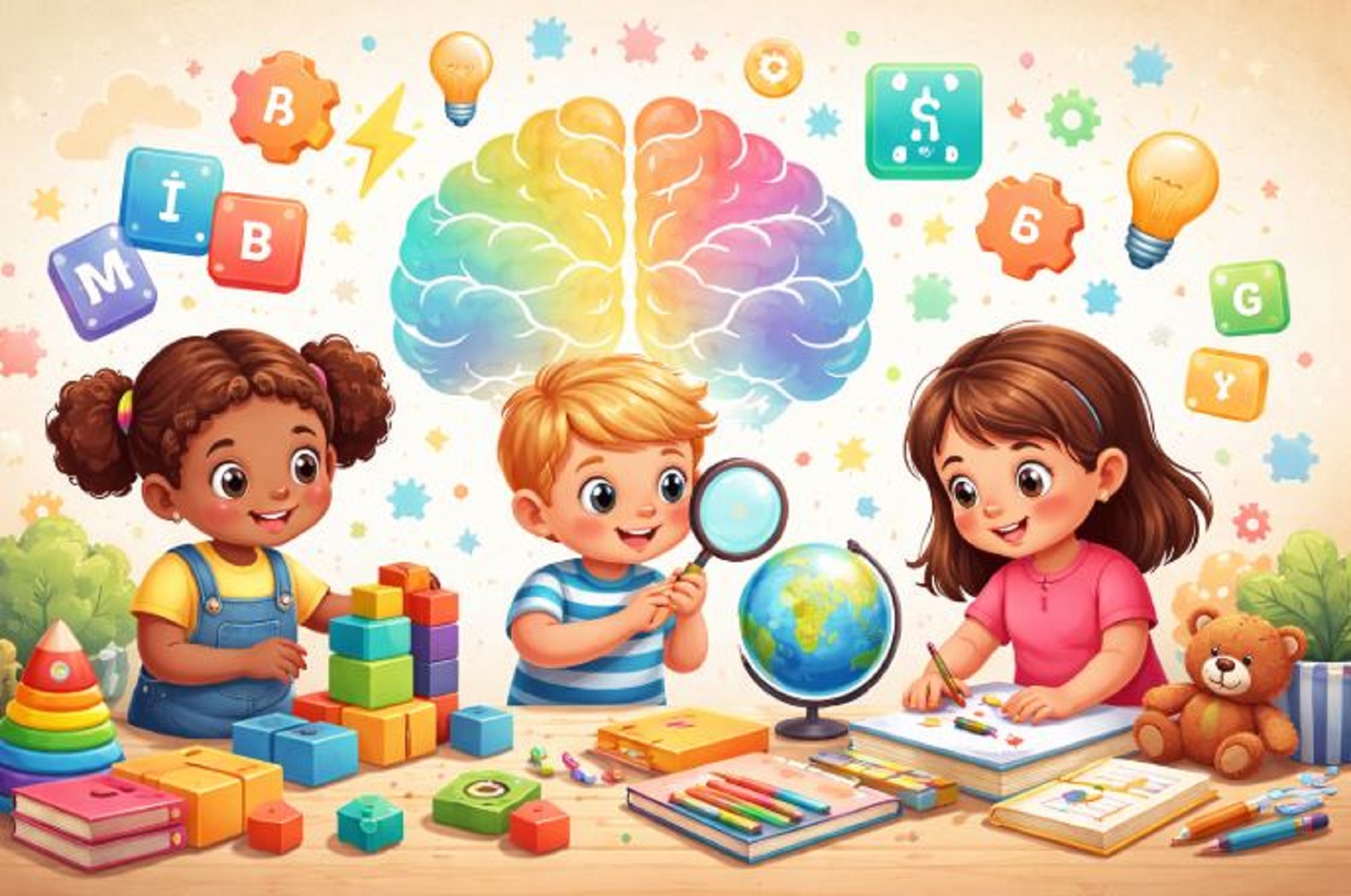
Introduction: Why Understanding Child Development Changes Everything
Raising a child is one of life’s greatest responsibilities, yet no parent is born with a manual. Many caregivers rely on instinct, tradition, or advice from others. While love and intention matter greatly, modern research shows that understanding how children grow mentally, emotionally, socially, and physically can dramatically improve outcomes.
Child development is not random. It follows predictable patterns shaped by biology, environment, relationships, and experiences. When parents understand these patterns, they can guide their children more effectively, avoid harmful mistakes, and create conditions that allow young minds to flourish.
This guide explores the science behind child development and reveals proven, practical strategies parents can apply daily to raise confident, intelligent, emotionally balanced children prepared for success in a complex world.
Section 1: What Child Development Really Means
Child development refers to the process through which children grow and change from infancy through adolescence. This includes multiple interconnected areas:
- Cognitive development (thinking and learning)
- Emotional development (feelings and regulation)
- Social development (relationships and interaction)
- Physical development (movement and health)
- Language development (communication skills)
These areas do not develop separately. They influence one another constantly. For example, language skills affect social confidence, and emotional security affects learning ability.
Understanding this interconnected growth is the foundation of effective parenting.
Section 2: The Brain Development Timeline Every Parent Should Know
A child’s brain grows faster in the first five years than at any other time in life. During this period:
- Neural connections form rapidly.
- Experiences shape brain architecture.
- Repeated interactions strengthen pathways.
Key Development Stages
Birth to Age 2
- Sensory exploration dominates learning.
- Attachment to caregivers forms emotional foundation.
- Language recognition begins.
Ages 3–5
- Imagination expands.
- Problem-solving skills develop.
- Emotional awareness begins.
Ages 6–12
- Logical thinking improves.
- Social comparison increases.
- Self-esteem becomes sensitive.
Teen Years
- Identity formation
- Decision-making skills
- Independence development
Each stage requires different parenting approaches. Strategies that work for a toddler may fail with a preteen.
Section 3: The Role of Environment in Shaping Intelligence
Genetics provide potential. Environment determines how much of that potential is realized.
Children raised in stimulating environments tend to develop:
- Stronger language skills
- Better problem-solving ability
- Higher emotional resilience
- Improved memory and attention
Elements of a Brain-Boosting Environment
- Safe and loving relationships
- Exposure to language and conversation
- Opportunities for play
- Encouragement of curiosity
- Consistent routines
The good news is that creating this environment does not require expensive toys or elite schools. Simple daily interactions often matter more.
Section 4: Why Emotional Security Is the Foundation of Intelligence
Research consistently shows that emotional stability supports learning. When children feel safe and supported:
- They explore more
- They ask questions
- They take healthy risks
- They develop confidence
When children feel stressed or insecure, their brains focus on survival instead of learning.
Signs of Strong Emotional Security
- Comfort seeking parents when upset
- Willingness to try new things
- Ability to express feelings
- Stable mood patterns
Parents who respond consistently and calmly to children’s needs help build this foundation.
Section 5: Proven Strategies That Strengthen Brain Development
Here are science-backed practices that significantly improve developmental outcomes.
1. Talk Constantly With Your Child
Language exposure is one of the strongest predictors of future academic success.
Ways to do this:
- Describe what you’re doing
- Ask open-ended questions
- Read aloud daily
- Encourage storytelling
2. Encourage Curiosity Instead of Giving Answers
When a child asks “why,” resist giving immediate explanations. Instead, ask:
- “What do you think?”
This builds reasoning skills and confidence.
3. Prioritize Playtime
Play is not wasted time. It is essential brain training.
Through play, children learn:
- Social negotiation
- Creativity
- Planning
- Emotional control
- Problem solving
Unstructured play is especially valuable.
4. Establish Predictable Routines
Routine helps children feel secure and improves:
- Behavior
- Sleep quality
- Emotional regulation
- Focus
Consistency creates psychological safety.
5. Praise Effort, Not Just Results
Instead of saying:
“You’re so smart.”
Say:
“You worked really hard on that.”
This teaches children that success comes from effort, not fixed ability.
Section 6: Nutrition’s Impact on Cognitive Growth
A child’s brain consumes more energy than any other organ during development. Proper nutrition supports:
- Memory
- Attention
- Mood stability
- Learning speed
Brain-Supporting Nutrients
- Omega-3 fatty acids
- Iron
- Zinc
- Protein
- Vitamins A, D, B-complex
Balanced meals fuel both physical and mental growth.
Section 7: The Power of Positive Discipline
Discipline is often misunderstood as punishment. True discipline means teaching.
Effective discipline strategies:
- Explain consequences
- Set clear expectations
- Stay calm
- Be consistent
- Model behavior
Punishment without explanation may stop behavior temporarily but does not teach self-control.
Section 8: Social Development and Peer Interaction
Children learn social skills through interaction with others. Peer relationships teach:
- Empathy
- Cooperation
- Conflict resolution
- Communication
- Respect for differences
Parents can support social growth by:
- Encouraging group activities
- Modeling respectful behavior
- Teaching emotional vocabulary Section 9: The Hidden Influence of Parental Behavior
Children learn more from what parents do than what they say.
They observe:
- How you handle stress
- How you speak to others
- How you solve problems
- How you manage emotions
Your behavior becomes their blueprint.
Section 10: Building Confidence That Lasts a Lifetime
Confidence is not built through praise alone. It grows when children experience:
- Small successes
- Support after failure
- Opportunities to try again
- Encouragement to solve problems independently
Allowing children to struggle slightly helps them develop resilience and belief in their abilities.
Section 11: Technology and Developing Minds
Technology can be both helpful and harmful depending on use.
Healthy Technology Habits
- Set time limits
- Prioritize educational content
- Avoid screens before sleep
- Encourage offline play
Balanced use ensures technology supports learning rather than replacing real-world experiences.
Section 12: Warning Signs Parents Should Never Ignore
Early detection of developmental challenges can make a huge difference.
Watch for:
- Delayed speech
- Lack of eye contact
- Extreme withdrawal
- Aggressive behavior
- Difficulty following instructions
If concerns arise, seeking professional advice early often leads to better outcomes.
Section 13: The Role of Sleep in Brain Development
Sleep is essential for memory consolidation and emotional regulation.
Children who get enough sleep typically show:
- Better focus
- Improved mood
- Faster learning
- Stronger immunity
Consistent bedtime routines greatly improve sleep quality.
Section 14: Creating a Growth-Focused Home Culture
A growth-focused home values learning over perfection.
Characteristics of such homes:
- Mistakes are treated as lessons
- Questions are encouraged
- Curiosity is celebrated
- Effort is recognized
Children raised in these environments develop lifelong learning habits.
Section 15: Long-Term Benefits of Strong Early Development
Children who receive proper developmental support are more likely to:
- Perform well academically
- Build healthy relationships
- Adapt to challenges
- Show leadership skills
- Maintain emotional balance
Early investment in development pays lifelong dividends.
Section 16: Common Parenting Mistakes That Limit Development
Avoid these harmful patterns:
- Overprotecting children
- Solving all problems for them
- Comparing them to others
- Ignoring emotions
- Using fear as discipline
These habits can weaken confidence and independence.
Section 17: A Practical Daily Development Checklist
Parents can support growth each day with simple actions:
Morning
- Positive greeting
- Nutritious breakfast
- Encouraging words
Afternoon
- Outdoor activity
- Conversation time
- Independent play
Evening
- Family discussion
- Reading together
- Consistent bedtime
Small daily habits create powerful long-term results.
FAQs
- What age is most important for child development?
The first five years are especially critical because brain connections form rapidly during this time. - Can parenting style really affect intelligence?
Yes. Supportive, stimulating environments strongly influence cognitive growth. - Do expensive toys improve development?
No. Interaction, conversation, and play matter far more than costly items. - How can I support my child’s emotional growth?
Listen to their feelings, validate emotions, and teach healthy expression. - What is the single most important parenting habit?
Consistent, loving interaction is the most powerful influence on development.
Conclusion: Raising Strong Minds Is a Science and an Art
Child development is not mysterious or unpredictable. It follows principles rooted in neuroscience, psychology, and behavioral science. When parents understand these principles, they gain the power to shape their child’s future in meaningful ways.
The most effective parenting does not require perfection. It requires awareness, patience, consistency, and intentional action. By applying proven strategies nurturing emotional security, encouraging curiosity, supporting learning, and modeling positive behavior parents create an environment where children can grow into capable, confident individuals.
Every conversation, every hug, every question answered, and every moment of attention contributes to building a child’s mind. The science is clear: small daily interactions shape lifelong outcomes.
When parents grow in knowledge, children grow in possibility.